•  

China: Giant Fireball Lights Up Night Sky as Suspected Meteor Falls in Guangdong

This is the rare moment that a suspected meteor streaked across the sky in Guangdong, dazzling local residents as a massive fireball suddenly lit up the darkness like daylight. On May 28, 2025, in Yangjiang, Guangdong, a loud boom was heard as a brilliant fireball, resembling a giant rock, tore through the sky and exploded in a bright flash, captured on dashcam. The sudden blaze turned the entire night sky into near-daylight for a few seconds, and onlookers were left stunned. Experts explained that such fireballs occur when a meteoroid enters Earth’s atmosphere and burns up due to friction, creating a bright meteor. If parts of the object survived the fiery descent and reached the ground, they were classified as meteorites. The video ended with the sky gradually fading back into darkness as the fireball disappeared from view.

  •  
Mount Fanjing Matcha Industry - China

Mount Fanjing Matcha Industry - China

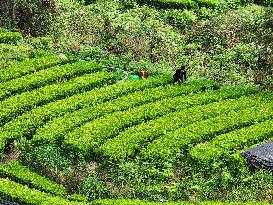
A drone photo shows a farmer weeding at a tea garden in Jiangkou County of Tongren, southwest China's Guizhou Province, on April 16, 2025. Located at the foot of Mount Fanjing, a UNESCO World Heritage Site, Jiangkou County is a powerhouse in the world's matcha industry. The county boasts over 10,000 hectares of tea plantations, nearly a fifth of which are dedicated to matcha production. In 2024, Jiangkou County produced more than 1,200 tonnes of matcha with a total output value of 350 million yuan (about 48.02 million U.S. dollars). The local matcha products have been exported to more than 40 overseas markets. Experts and agronomists believe that Guizhou, located on a plateau, possesses geographical and climatic advantages such as high altitude, low latitude, abundant fog and limited sunlight ideal for growing tea. Therefore, tea produced in this area is green, ecological and organic. Photo by Ou Dongqu/Xinhua/ABACAPRESS.COM

  •  
Mount Fanjing Matcha Industry - China

Mount Fanjing Matcha Industry - China

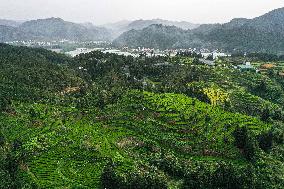
An aerial drone photo shows a tea garden in Jiangkou County of Tongren, southwest China's Guizhou Province, on April 16, 2025. Located at the foot of Mount Fanjing, a UNESCO World Heritage Site, Jiangkou County is a powerhouse in the world's matcha industry. The county boasts over 10,000 hectares of tea plantations, nearly a fifth of which are dedicated to matcha production. In 2024, Jiangkou County produced more than 1,200 tonnes of matcha with a total output value of 350 million yuan (about 48.02 million U.S. dollars). The local matcha products have been exported to more than 40 overseas markets. Experts and agronomists believe that Guizhou, located on a plateau, possesses geographical and climatic advantages such as high altitude, low latitude, abundant fog and limited sunlight ideal for growing tea. Therefore, tea produced in this area is green, ecological and organic. Photo by Yang Wenbin/Xinhua/ABACAPRESS.COM

  •  
Mount Fanjing Matcha Industry - China

Mount Fanjing Matcha Industry - China

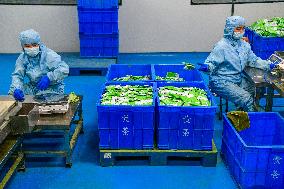
Workers pack matcha powder at a tea industrial park in Jiangkou County of Tongren, southwest China's Guizhou Province, on April 14, 2025. Located at the foot of Mount Fanjing, a UNESCO World Heritage Site, Jiangkou County is a powerhouse in the world's matcha industry. The county boasts over 10,000 hectares of tea plantations, nearly a fifth of which are dedicated to matcha production. In 2024, Jiangkou County produced more than 1,200 tonnes of matcha with a total output value of 350 million yuan (about 48.02 million U.S. dollars). The local matcha products have been exported to more than 40 overseas markets. Experts and agronomists believe that Guizhou, located on a plateau, possesses geographical and climatic advantages such as high altitude, low latitude, abundant fog and limited sunlight ideal for growing tea. Therefore, tea produced in this area is green, ecological and organic. Photo by Yang Wenbin/Xinhua/ABACAPRESS.COM

  •  
Mount Fanjing Matcha Industry - China

Mount Fanjing Matcha Industry - China

A worker packs matcha powder at a tea industrial park in Jiangkou County of Tongren, southwest China's Guizhou Province, on April 14, 2025. Located at the foot of Mount Fanjing, a UNESCO World Heritage Site, Jiangkou County is a powerhouse in the world's matcha industry. The county boasts over 10,000 hectares of tea plantations, nearly a fifth of which are dedicated to matcha production. In 2024, Jiangkou County produced more than 1,200 tonnes of matcha with a total output value of 350 million yuan (about 48.02 million U.S. dollars). The local matcha products have been exported to more than 40 overseas markets. Experts and agronomists believe that Guizhou, located on a plateau, possesses geographical and climatic advantages such as high altitude, low latitude, abundant fog and limited sunlight ideal for growing tea. Therefore, tea produced in this area is green, ecological and organic. Photo by Ou Dongqu/Xinhua/ABACAPRESS.COM

  •  
Mount Fanjing Matcha Industry - China

Mount Fanjing Matcha Industry - China

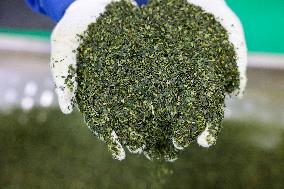
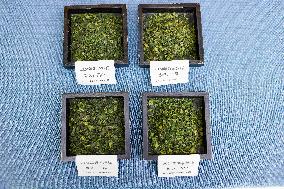
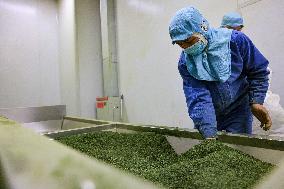
A staff member checks the raw materials for matcha production at a tea industrial park in Jiangkou County of Tongren, southwest China's Guizhou Province, on April 14, 2025. Located at the foot of Mount Fanjing, a UNESCO World Heritage Site, Jiangkou County is a powerhouse in the world's matcha industry. The county boasts over 10,000 hectares of tea plantations, nearly a fifth of which are dedicated to matcha production. In 2024, Jiangkou County produced more than 1,200 tonnes of matcha with a total output value of 350 million yuan (about 48.02 million U.S. dollars). The local matcha products have been exported to more than 40 overseas markets. Experts and agronomists believe that Guizhou, located on a plateau, possesses geographical and climatic advantages such as high altitude, low latitude, abundant fog and limited sunlight ideal for growing tea. Therefore, tea produced in this area is green, ecological and organic. Photo by Ou Dongqu/Xinhua/ABACAPRESS.COM

  •  
Mount Fanjing Matcha Industry - China

Mount Fanjing Matcha Industry - China

Raw materials for matcha production are on display in a tea industrial park in Jiangkou County of Tongren, southwest China's Guizhou Province, on April 14, 2025. Located at the foot of Mount Fanjing, a UNESCO World Heritage Site, Jiangkou County is a powerhouse in the world's matcha industry. The county boasts over 10,000 hectares of tea plantations, nearly a fifth of which are dedicated to matcha production. In 2024, Jiangkou County produced more than 1,200 tonnes of matcha with a total output value of 350 million yuan (about 48.02 million U.S. dollars). The local matcha products have been exported to more than 40 overseas markets. Experts and agronomists believe that Guizhou, located on a plateau, possesses geographical and climatic advantages such as high altitude, low latitude, abundant fog and limited sunlight ideal for growing tea. Therefore, tea produced in this area is green, ecological and organic. Photo by Ou Dongqu/Xinhua/ABACAPRESS.COM

  •  
Mount Fanjing Matcha Industry - China

Mount Fanjing Matcha Industry - China

A staff member produces matcha at a tea industrial park in Jiangkou County of Tongren, southwest China's Guizhou Province, on April 14, 2025. Located at the foot of Mount Fanjing, a UNESCO World Heritage Site, Jiangkou County is a powerhouse in the world's matcha industry. The county boasts over 10,000 hectares of tea plantations, nearly a fifth of which are dedicated to matcha production. In 2024, Jiangkou County produced more than 1,200 tonnes of matcha with a total output value of 350 million yuan (about 48.02 million U.S. dollars). The local matcha products have been exported to more than 40 overseas markets. Experts and agronomists believe that Guizhou, located on a plateau, possesses geographical and climatic advantages such as high altitude, low latitude, abundant fog and limited sunlight ideal for growing tea. Therefore, tea produced in this area is green, ecological and organic. Photo by Ou Dongqu/Xinhua/ABACAPRESS.COM

  •  
Mount Fanjing Matcha Industry - China

Mount Fanjing Matcha Industry - China

An aerial drone photo shows a farmer applying shading nets at a tea garden in Jiangkou County of Tongren, southwest China's Guizhou Province, on April 16, 2025. Located at the foot of Mount Fanjing, a UNESCO World Heritage Site, Jiangkou County is a powerhouse in the world's matcha industry. The county boasts over 10,000 hectares of tea plantations, nearly a fifth of which are dedicated to matcha production. In 2024, Jiangkou County produced more than 1,200 tonnes of matcha with a total output value of 350 million yuan (about 48.02 million U.S. dollars). The local matcha products have been exported to more than 40 overseas markets. Experts and agronomists believe that Guizhou, located on a plateau, possesses geographical and climatic advantages such as high altitude, low latitude, abundant fog and limited sunlight ideal for growing tea. Therefore, tea produced in this area is green, ecological and organic. Photo by Ou Dongqu/Xinhua/ABACAPRESS.COM

  •  
Mount Fanjing Matcha Industry - China

Mount Fanjing Matcha Industry - China

Matcha beverages are displayed at a tea industrial park in Jiangkou County of Tongren, southwest China's Guizhou Province, on April 14, 2025. Located at the foot of Mount Fanjing, a UNESCO World Heritage Site, Jiangkou County is a powerhouse in the world's matcha industry. The county boasts over 10,000 hectares of tea plantations, nearly a fifth of which are dedicated to matcha production. In 2024, Jiangkou County produced more than 1,200 tonnes of matcha with a total output value of 350 million yuan (about 48.02 million U.S. dollars). The local matcha products have been exported to more than 40 overseas markets. Experts and agronomists believe that Guizhou, located on a plateau, possesses geographical and climatic advantages such as high altitude, low latitude, abundant fog and limited sunlight ideal for growing tea. Therefore, tea produced in this area is green, ecological and organic. Photo by Yang Wenbin/Xinhua/ABACAPRESS.COM

  •  
Mount Fanjing Matcha Industry - China

Mount Fanjing Matcha Industry - China

A staff member works at a matcha factory in Jiangkou County of Tongren, southwest China's Guizhou Province, on April 14, 2025. Located at the foot of Mount Fanjing, a UNESCO World Heritage Site, Jiangkou County is a powerhouse in the world's matcha industry. The county boasts over 10,000 hectares of tea plantations, nearly a fifth of which are dedicated to matcha production. In 2024, Jiangkou County produced more than 1,200 tonnes of matcha with a total output value of 350 million yuan (about 48.02 million U.S. dollars). The local matcha products have been exported to more than 40 overseas markets. Experts and agronomists believe that Guizhou, located on a plateau, possesses geographical and climatic advantages such as high altitude, low latitude, abundant fog and limited sunlight ideal for growing tea. Therefore, tea produced in this area is green, ecological and organic. Photo by Ou Dongqu/Xinhua/ABACAPRESS.COM

  •  
Mount Fanjing Matcha Industry - China

Mount Fanjing Matcha Industry - China

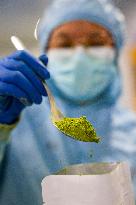
Matcha powder is pictured at a matcha factory in Jiangkou County of Tongren, southwest China's Guizhou Province, on April 14, 2025. Located at the foot of Mount Fanjing, a UNESCO World Heritage Site, Jiangkou County is a powerhouse in the world's matcha industry. The county boasts over 10,000 hectares of tea plantations, nearly a fifth of which are dedicated to matcha production. In 2024, Jiangkou County produced more than 1,200 tonnes of matcha with a total output value of 350 million yuan (about 48.02 million U.S. dollars). The local matcha products have been exported to more than 40 overseas markets. Experts and agronomists believe that Guizhou, located on a plateau, possesses geographical and climatic advantages such as high altitude, low latitude, abundant fog and limited sunlight ideal for growing tea. Therefore, tea produced in this area is green, ecological and organic. Photo by Yang Wenbin/Xinhua/ABACAPRESS.COM

  •  
Mount Fanjing Matcha Industry - China

Mount Fanjing Matcha Industry - China

A staff member makes matcha beverage at a tea industrial park in Jiangkou County of Tongren, southwest China's Guizhou Province, on April 14, 2025. Located at the foot of Mount Fanjing, a UNESCO World Heritage Site, Jiangkou County is a powerhouse in the world's matcha industry. The county boasts over 10,000 hectares of tea plantations, nearly a fifth of which are dedicated to matcha production. In 2024, Jiangkou County produced more than 1,200 tonnes of matcha with a total output value of 350 million yuan (about 48.02 million U.S. dollars). The local matcha products have been exported to more than 40 overseas markets. Experts and agronomists believe that Guizhou, located on a plateau, possesses geographical and climatic advantages such as high altitude, low latitude, abundant fog and limited sunlight ideal for growing tea. Therefore, tea produced in this area is green, ecological and organic. Photo by Ou Dongqu/Xinhua/ABACAPRESS.COM

  •  
Mount Fanjing Matcha Industry - China

Mount Fanjing Matcha Industry - China

A staff member makes matcha beverage at a tea industrial park in Jiangkou County of Tongren, southwest China's Guizhou Province, on April 14, 2025. Located at the foot of Mount Fanjing, a UNESCO World Heritage Site, Jiangkou County is a powerhouse in the world's matcha industry. The county boasts over 10,000 hectares of tea plantations, nearly a fifth of which are dedicated to matcha production. In 2024, Jiangkou County produced more than 1,200 tonnes of matcha with a total output value of 350 million yuan (about 48.02 million U.S. dollars). The local matcha products have been exported to more than 40 overseas markets. Experts and agronomists believe that Guizhou, located on a plateau, possesses geographical and climatic advantages such as high altitude, low latitude, abundant fog and limited sunlight ideal for growing tea. Therefore, tea produced in this area is green, ecological and organic. Photo by Ou Dongqu/Xinhua/ABACAPRESS.COM

  •  
Mount Fanjing Matcha Industry - China

Mount Fanjing Matcha Industry - China

An aerial drone photo shows a tea garden in Jiangkou County of Tongren, southwest China's Guizhou Province, on April 16, 2025. Located at the foot of Mount Fanjing, a UNESCO World Heritage Site, Jiangkou County is a powerhouse in the world's matcha industry. The county boasts over 10,000 hectares of tea plantations, nearly a fifth of which are dedicated to matcha production. In 2024, Jiangkou County produced more than 1,200 tonnes of matcha with a total output value of 350 million yuan (about 48.02 million U.S. dollars). The local matcha products have been exported to more than 40 overseas markets. Experts and agronomists believe that Guizhou, located on a plateau, possesses geographical and climatic advantages such as high altitude, low latitude, abundant fog and limited sunlight ideal for growing tea. Therefore, tea produced in this area is green, ecological and organic. Photo by Ou Dongqu/Xinhua/ABACAPRESS.COM

  •  
Myanmar Earthquake Aftermath

Myanmar Earthquake Aftermath

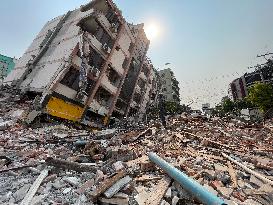
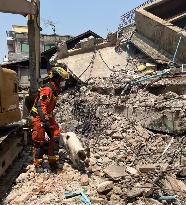
A member of China's Blue Sky Rescue team carries out rescue work at a quake site in Mandalay, Myanmar, March 31, 2025. Following the devastating earthquake in Myanmar, multiple Chinese rescue teams have arrived in the disaster-stricken areas, working with local responders around the clock to search for survivors. The rescuers combed through the ruins of apartments, hotels and hospitals to find signs of life. Continuous aftershocks, power cuts, destroyed roads and communication interruptions made their rescue work even harder. Meanwhile, more Chinese rescue teams are heading to Myanmar, bringing in earthquake experts, structural engineers, medical personnel and canine units, as well as life detectors, demolition equipment and field hospital systems. Photo by Blue Sky Rescue team/Handout via Xinhua/ABACAPRESS.COM

  •  
Myanmar Earthquake Aftermath

Myanmar Earthquake Aftermath

Members from the China Search and Rescue Team and the civilian rescue team of RAMUNION RESCUE jointly transfer a survivor at a quake site in Mandalay, Myanmar, March 31, 2025. Following the devastating earthquake in Myanmar, multiple Chinese rescue teams have arrived in the disaster-stricken areas, working with local responders around the clock to search for survivors. The rescuers combed through the ruins of apartments, hotels and hospitals to find signs of life. Continuous aftershocks, power cuts, destroyed roads and communication interruptions made their rescue work even harder. Meanwhile, more Chinese rescue teams are heading to Myanmar, bringing in earthquake experts, structural engineers, medical personnel and canine units, as well as life detectors, demolition equipment and field hospital systems. Photo by Myo Kyaw Soe/Xinhua/ABACAPRESS.COM

  •  
Myanmar Earthquake Aftermath

Myanmar Earthquake Aftermath

Rescuers from China carry out rescue work at a quake site in Mandalay, Myanmar, March 31, 2025. Following the devastating earthquake in Myanmar, multiple Chinese rescue teams have arrived in the disaster-stricken areas, working with local responders around the clock to search for survivors. The rescuers combed through the ruins of apartments, hotels and hospitals to find signs of life. Continuous aftershocks, power cuts, destroyed roads and communication interruptions made their rescue work even harder. Meanwhile, more Chinese rescue teams are heading to Myanmar, bringing in earthquake experts, structural engineers, medical personnel and canine units, as well as life detectors, demolition equipment and field hospital systems. Photo by Jiang Chao/Xinhua/ABACAPRESS.COM

  •  
Myanmar Earthquake Aftermath

Myanmar Earthquake Aftermath

Members of the civilian rescue team of RAMUNION RESCUE carry out rescue work at a quake site in Mandalay, Myanmar, March 30, 2025. Following the devastating earthquake in Myanmar, multiple Chinese rescue teams have arrived in the disaster-stricken areas, working with local responders around the clock to search for survivors. The rescuers combed through the ruins of apartments, hotels and hospitals to find signs of life. Continuous aftershocks, power cuts, destroyed roads and communication interruptions made their rescue work even harder. Meanwhile, more Chinese rescue teams are heading to Myanmar, bringing in earthquake experts, structural engineers, medical personnel and canine units, as well as life detectors, demolition equipment and field hospital systems. Photo by Myo Kyaw Soe/Xinhua/ABACAPRESS.COM

  •  
Myanmar Earthquake Aftermath

Myanmar Earthquake Aftermath

A rescuer from China carries out rescue work at a quake site in Mandalay, Myanmar, March 31, 2025. Following the devastating earthquake in Myanmar, multiple Chinese rescue teams have arrived in the disaster-stricken areas, working with local responders around the clock to search for survivors. The rescuers combed through the ruins of apartments, hotels and hospitals to find signs of life. Continuous aftershocks, power cuts, destroyed roads and communication interruptions made their rescue work even harder. Meanwhile, more Chinese rescue teams are heading to Myanmar, bringing in earthquake experts, structural engineers, medical personnel and canine units, as well as life detectors, demolition equipment and field hospital systems. Photo by Jiang Chao/Xinhua/ABACAPRESS.COM

  •  
Myanmar Earthquake Aftermath

Myanmar Earthquake Aftermath

Members from the China Search and Rescue Team and the civilian rescue team of RAMUNION RESCUE jointly transfer a survivor at a quake site in Mandalay, Myanmar, March 31, 2025. Following the devastating earthquake in Myanmar, multiple Chinese rescue teams have arrived in the disaster-stricken areas, working with local responders around the clock to search for survivors. The rescuers combed through the ruins of apartments, hotels and hospitals to find signs of life. Continuous aftershocks, power cuts, destroyed roads and communication interruptions made their rescue work even harder. Meanwhile, more Chinese rescue teams are heading to Myanmar, bringing in earthquake experts, structural engineers, medical personnel and canine units, as well as life detectors, demolition equipment and field hospital systems. Photo by Myo Kyaw Soe/Xinhua/ABACAPRESS.COM

  •  
Myanmar Earthquake Aftermath

Myanmar Earthquake Aftermath

Members from the China Search and Rescue Team transfer a survivor at a quake site in Mandalay city, Myanmar, March 31, 2025. Following the devastating earthquake in Myanmar, multiple Chinese rescue teams have arrived in the disaster-stricken areas, working with local responders around the clock to search for survivors. The rescuers combed through the ruins of apartments, hotels and hospitals to find signs of life. Continuous aftershocks, power cuts, destroyed roads and communication interruptions made their rescue work even harder. Meanwhile, more Chinese rescue teams are heading to Myanmar, bringing in earthquake experts, structural engineers, medical personnel and canine units, as well as life detectors, demolition equipment and field hospital systems. Photo by Cai Yang/Xinhua/ABACAPRESS.COM

  •  
Myanmar Earthquake Aftermath

Myanmar Earthquake Aftermath

Members from the China Search and Rescue Team carry out rescue work at a quake site in Mandalay, Myanmar, March 30, 2025. Following the devastating earthquake in Myanmar, multiple Chinese rescue teams have arrived in the disaster-stricken areas, working with local responders around the clock to search for survivors. The rescuers combed through the ruins of apartments, hotels and hospitals to find signs of life. Continuous aftershocks, power cuts, destroyed roads and communication interruptions made their rescue work even harder. Meanwhile, more Chinese rescue teams are heading to Myanmar, bringing in earthquake experts, structural engineers, medical personnel and canine units, as well as life detectors, demolition equipment and field hospital systems. Photo by Cai Yang/Xinhua/ABACAPRESS.COM

  •  
Myanmar Earthquake Aftermath

Myanmar Earthquake Aftermath

A member from the China Search and Rescue Team carries out rescue work at a quake site in Mandalay, Myanmar, March 30, 2025. Following the devastating earthquake in Myanmar, multiple Chinese rescue teams have arrived in the disaster-stricken areas, working with local responders around the clock to search for survivors. The rescuers combed through the ruins of apartments, hotels and hospitals to find signs of life. Continuous aftershocks, power cuts, destroyed roads and communication interruptions made their rescue work even harder. Meanwhile, more Chinese rescue teams are heading to Myanmar, bringing in earthquake experts, structural engineers, medical personnel and canine units, as well as life detectors, demolition equipment and field hospital systems. Photo by Cai Yang/Xinhua/ABACAPRESS.COM

  •  
Myanmar Earthquake Aftermath

Myanmar Earthquake Aftermath

Members from the China Search and Rescue Team carry out rescue work at a quake site in Mandalay, Myanmar, March 30, 2025. Following the devastating earthquake in Myanmar, multiple Chinese rescue teams have arrived in the disaster-stricken areas, working with local responders around the clock to search for survivors. The rescuers combed through the ruins of apartments, hotels and hospitals to find signs of life. Continuous aftershocks, power cuts, destroyed roads and communication interruptions made their rescue work even harder. Meanwhile, more Chinese rescue teams are heading to Myanmar, bringing in earthquake experts, structural engineers, medical personnel and canine units, as well as life detectors, demolition equipment and field hospital systems. Photo by Cai Yang/Xinhua/ABACAPRESS.COM

  •  
Myanmar Earthquake Aftermath

Myanmar Earthquake Aftermath

A member of a rescue team from China's Hong Kong Special Administrative Region carries out rescue work at a quake site in Mandalay, Myanmar, April 1, 2025. Following the devastating earthquake in Myanmar, multiple Chinese rescue teams have arrived in the disaster-stricken areas, working with local responders around the clock to search for survivors. The rescuers combed through the ruins of apartments, hotels and hospitals to find signs of life. Continuous aftershocks, power cuts, destroyed roads and communication interruptions made their rescue work even harder. Meanwhile, more Chinese rescue teams are heading to Myanmar, bringing in earthquake experts, structural engineers, medical personnel and canine units, as well as life detectors, demolition equipment and field hospital systems. (Security Bureau of HKSAR government/Handout via Xinhua)

  •  

China: Crows Darken Skies Of Chifeng In Rare Gathering In Inner Mongolia

On the evening of October 26, 2024, a swarm of crows gathered above Chifeng City Hospital in Inner Mongolia, with some birds perched on the roof. This unusual phenomenon has occurred before in the area, with local officials attributing it to the "urban heat island effect" that attracts the crows. Experts warn that crow droppings can damage vehicles and clothing. The event ended without incident, but authorities continue to monitor the situation.

  •  
McDonald's China Science and Technology Research and Development Center Building in Nanjing

McDonald's China Science and Technology Research and Development Center Building in Nanjing

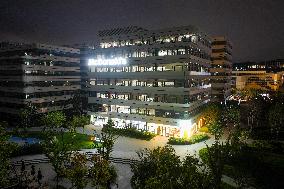
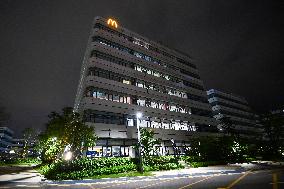
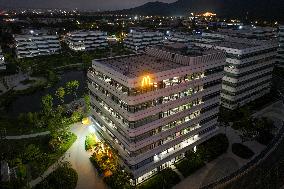
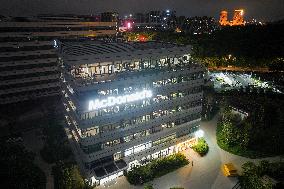
NANJING, CHINA - AUGUST 27, 2024 - The McDonald's China Science and Technology Research and Development Center building in Nanjing, Jiangsu province, China, Aug 27, 2024. In early August, the new building of McDonald's China Science and Technology Research and Development Center was officially opened. As the research headquarters of McDonald's China, it will house more than 450 technical experts to provide integrated solutions for local information systems, such as McDonald's APP, RGMBoss, and digital food safety systems, for more than 6,200 restaurants across the country.

  •  
McDonald's China Science and Technology Research and Development Center Building in Nanjing

McDonald's China Science and Technology Research and Development Center Building in Nanjing

NANJING, CHINA - AUGUST 27, 2024 - The McDonald's China Science and Technology Research and Development Center building in Nanjing, Jiangsu province, China, Aug 27, 2024. In early August, the new building of McDonald's China Science and Technology Research and Development Center was officially opened. As the research headquarters of McDonald's China, it will house more than 450 technical experts to provide integrated solutions for local information systems, such as McDonald's APP, RGMBoss, and digital food safety systems, for more than 6,200 restaurants across the country.

  •  
McDonald's China Science and Technology Research and Development Center Building in Nanjing

McDonald's China Science and Technology Research and Development Center Building in Nanjing

NANJING, CHINA - AUGUST 27, 2024 - The McDonald's China Science and Technology Research and Development Center building in Nanjing, Jiangsu province, China, Aug 27, 2024. In early August, the new building of McDonald's China Science and Technology Research and Development Center was officially opened. As the research headquarters of McDonald's China, it will house more than 450 technical experts to provide integrated solutions for local information systems, such as McDonald's APP, RGMBoss, and digital food safety systems, for more than 6,200 restaurants across the country.

  •  
McDonald's China Science and Technology Research and Development Center Building in Nanjing

McDonald's China Science and Technology Research and Development Center Building in Nanjing

NANJING, CHINA - AUGUST 27, 2024 - The McDonald's China Science and Technology Research and Development Center building in Nanjing, Jiangsu province, China, Aug 27, 2024. In early August, the new building of McDonald's China Science and Technology Research and Development Center was officially opened. As the research headquarters of McDonald's China, it will house more than 450 technical experts to provide integrated solutions for local information systems, such as McDonald's APP, RGMBoss, and digital food safety systems, for more than 6,200 restaurants across the country.

  •  
McDonald's China Science and Technology Research and Development Center Building in Nanjing

McDonald's China Science and Technology Research and Development Center Building in Nanjing

NANJING, CHINA - AUGUST 27, 2024 - The McDonald's China Science and Technology Research and Development Center building in Nanjing, Jiangsu province, China, Aug 27, 2024. In early August, the new building of McDonald's China Science and Technology Research and Development Center was officially opened. As the research headquarters of McDonald's China, it will house more than 450 technical experts to provide integrated solutions for local information systems, such as McDonald's APP, RGMBoss, and digital food safety systems, for more than 6,200 restaurants across the country.

  •  
McDonald's China Science and Technology Research and Development Center Building in Nanjing

McDonald's China Science and Technology Research and Development Center Building in Nanjing

NANJING, CHINA - AUGUST 27, 2024 - The McDonald's China Science and Technology Research and Development Center building in Nanjing, Jiangsu province, China, Aug 27, 2024. In early August, the new building of McDonald's China Science and Technology Research and Development Center was officially opened. As the research headquarters of McDonald's China, it will house more than 450 technical experts to provide integrated solutions for local information systems, such as McDonald's APP, RGMBoss, and digital food safety systems, for more than 6,200 restaurants across the country.

  •  
McDonald's China Science and Technology Research and Development Center Building in Nanjing

McDonald's China Science and Technology Research and Development Center Building in Nanjing

NANJING, CHINA - AUGUST 27, 2024 - The McDonald's China Science and Technology Research and Development Center building in Nanjing, Jiangsu province, China, Aug 27, 2024. In early August, the new building of McDonald's China Science and Technology Research and Development Center was officially opened. As the research headquarters of McDonald's China, it will house more than 450 technical experts to provide integrated solutions for local information systems, such as McDonald's APP, RGMBoss, and digital food safety systems, for more than 6,200 restaurants across the country.

  •  
McDonald's China Science and Technology Research and Development Center Building in Nanjing

McDonald's China Science and Technology Research and Development Center Building in Nanjing

NANJING, CHINA - AUGUST 27, 2024 - The McDonald's China Science and Technology Research and Development Center building in Nanjing, Jiangsu province, China, Aug 27, 2024. In early August, the new building of McDonald's China Science and Technology Research and Development Center was officially opened. As the research headquarters of McDonald's China, it will house more than 450 technical experts to provide integrated solutions for local information systems, such as McDonald's APP, RGMBoss, and digital food safety systems, for more than 6,200 restaurants across the country.

  •  
McDonald's China Science and Technology Research and Development Center Building in Nanjing

McDonald's China Science and Technology Research and Development Center Building in Nanjing

NANJING, CHINA - AUGUST 27, 2024 - The McDonald's China Science and Technology Research and Development Center building in Nanjing, Jiangsu province, China, Aug 27, 2024. In early August, the new building of McDonald's China Science and Technology Research and Development Center was officially opened. As the research headquarters of McDonald's China, it will house more than 450 technical experts to provide integrated solutions for local information systems, such as McDonald's APP, RGMBoss, and digital food safety systems, for more than 6,200 restaurants across the country.

  •  
McDonald's China Science and Technology Research and Development Center Building in Nanjing

McDonald's China Science and Technology Research and Development Center Building in Nanjing

NANJING, CHINA - AUGUST 27, 2024 - The McDonald's China Science and Technology Research and Development Center building in Nanjing, Jiangsu province, China, Aug 27, 2024. In early August, the new building of McDonald's China Science and Technology Research and Development Center was officially opened. As the research headquarters of McDonald's China, it will house more than 450 technical experts to provide integrated solutions for local information systems, such as McDonald's APP, RGMBoss, and digital food safety systems, for more than 6,200 restaurants across the country.

  •  
McDonald's China Science and Technology Research and Development Center Building in Nanjing

McDonald's China Science and Technology Research and Development Center Building in Nanjing

NANJING, CHINA - AUGUST 27, 2024 - The McDonald's China Science and Technology Research and Development Center building in Nanjing, Jiangsu province, China, Aug 27, 2024. In early August, the new building of McDonald's China Science and Technology Research and Development Center was officially opened. As the research headquarters of McDonald's China, it will house more than 450 technical experts to provide integrated solutions for local information systems, such as McDonald's APP, RGMBoss, and digital food safety systems, for more than 6,200 restaurants across the country.

  •  
CHINA-GUANGXI-LIUZHOU-PICKLED BAMBOO SHOOTS-YOUNG ENTREPRENEUR (CN)

CHINA-GUANGXI-LIUZHOU-PICKLED BAMBOO SHOOTS-YOUNG ENTREPRENEUR (CN)

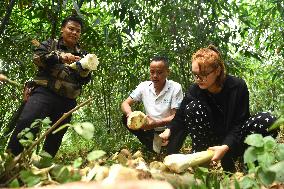
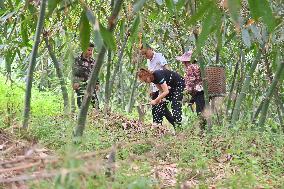
(240725) -- LIUZHOU, July 25, 2024 Photo by Xinhua/ABACAPRESS.COM) -- Yan Qianqian (1st, R) and her father Yan Jiantiao (C) harvest bamboo shoots at a planting base in Liuzhou, south China's Guangxi Zhuang Autonomous Region, July 23, 2024. After working at an airport for 5 years, Yan Qianqian decided to quit the job and start her own business in her hometown in 2021. Yan Qianqian, now 29, and her father Yan Jiantiao founded an agriculture company focusing on producing pickled bamboo shoots, which is an important ingredient for the popular Luosifen rice noodles. For years, she has been working with experts from local universities to improve the traditional making methods of the pickled bamboo shoots with modern technologies, trying to gain more favor from the young generation. Photo by Xinhua/ABACAPRESS.COM/Huang Xiaobang)

  •  
CHINA-GUANGXI-LIUZHOU-PICKLED BAMBOO SHOOTS-YOUNG ENTREPRENEUR (CN)

CHINA-GUANGXI-LIUZHOU-PICKLED BAMBOO SHOOTS-YOUNG ENTREPRENEUR (CN)

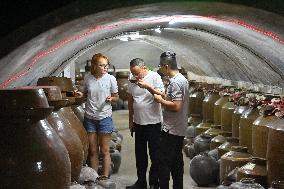
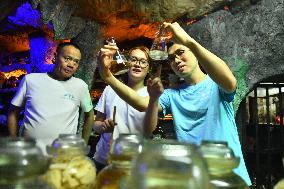
(240725) -- LIUZHOU, July 25, 2024 Photo by Xinhua/ABACAPRESS.COM) -- Yan Qianqian (2nd, R) and her father Yan Jiantiao (1st, R) check the ferment situation of pickled bamboo shoots with Dr. Yu Wanguo (1st, L) from College of Biological and Chemical Engineering under Guangxi University of Science and Technology, in Liuzhou, south China's Guangxi Zhuang Autonomous Region, July 24, 2024. After working at an airport for 5 years, Yan Qianqian decided to quit the job and start her own business in her hometown in 2021. Yan Qianqian, now 29, and her father Yan Jiantiao founded an agriculture company focusing on producing pickled bamboo shoots, which is an important ingredient for the popular Luosifen rice noodles. For years, she has been working with experts from local universities to improve the traditional making methods of the pickled bamboo shoots with modern technologies, trying to gain more favor from the young generation. Photo by Xinhua/ABACAPRESS.COM/Huang Xiaobang)

  •  
CHINA-GUANGXI-LIUZHOU-PICKLED BAMBOO SHOOTS-YOUNG ENTREPRENEUR (CN)

CHINA-GUANGXI-LIUZHOU-PICKLED BAMBOO SHOOTS-YOUNG ENTREPRENEUR (CN)

(240725) -- LIUZHOU, July 25, 2024 Photo by Xinhua/ABACAPRESS.COM) -- An aerial drone photo taken on July 23, 2024 shows Yan Qianqian driving a car to harvest bamboo shoots at a planting base in Liuzhou, south China's Guangxi Zhuang Autonomous Region. After working at an airport for 5 years, Yan Qianqian decided to quit the job and start her own business in her hometown in 2021. Yan Qianqian, now 29, and her father Yan Jiantiao founded an agriculture company focusing on producing pickled bamboo shoots, which is an important ingredient for the popular Luosifen rice noodles. For years, she has been working with experts from local universities to improve the traditional making methods of the pickled bamboo shoots with modern technologies, trying to gain more favor from the young generation. Photo by Xinhua/ABACAPRESS.COM/Huang Xiaobang)

  •  
CHINA-GUANGXI-LIUZHOU-PICKLED BAMBOO SHOOTS-YOUNG ENTREPRENEUR (CN)

CHINA-GUANGXI-LIUZHOU-PICKLED BAMBOO SHOOTS-YOUNG ENTREPRENEUR (CN)

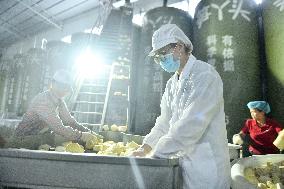
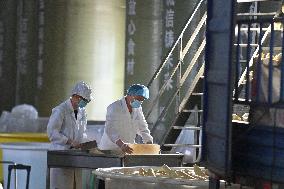
(240725) -- LIUZHOU, July 25, 2024 Photo by Xinhua/ABACAPRESS.COM) -- Yan Qianqian (C) processes bamboo shoots at a production line of a pickled bamboo shoots processing plant in Liuzhou, south China's Guangxi Zhuang Autonomous Region, July 23, 2024. After working at an airport for 5 years, Yan Qianqian decided to quit the job and start her own business in her hometown in 2021. Yan Qianqian, now 29, and her father Yan Jiantiao founded an agriculture company focusing on producing pickled bamboo shoots, which is an important ingredient for the popular Luosifen rice noodles. For years, she has been working with experts from local universities to improve the traditional making methods of the pickled bamboo shoots with modern technologies, trying to gain more favor from the young generation. Photo by Xinhua/ABACAPRESS.COM/Huang Xiaobang)

  •  
CHINA-GUANGXI-LIUZHOU-PICKLED BAMBOO SHOOTS-YOUNG ENTREPRENEUR (CN)

CHINA-GUANGXI-LIUZHOU-PICKLED BAMBOO SHOOTS-YOUNG ENTREPRENEUR (CN)

(240725) -- LIUZHOU, July 25, 2024 Photo by Xinhua/ABACAPRESS.COM) -- Yan Qianqian (L) gives instruction as a worker listens at a pickled bamboo shoots processing plant in Liuzhou, south China's Guangxi Zhuang Autonomous Region, July 23, 2024. After working at an airport for 5 years, Yan Qianqian decided to quit the job and start her own business in her hometown in 2021. Yan Qianqian, now 29, and her father Yan Jiantiao founded an agriculture company focusing on producing pickled bamboo shoots, which is an important ingredient for the popular Luosifen rice noodles. For years, she has been working with experts from local universities to improve the traditional making methods of the pickled bamboo shoots with modern technologies, trying to gain more favor from the young generation. Photo by Xinhua/ABACAPRESS.COM/Huang Xiaobang)

  •  
CHINA-GUANGXI-LIUZHOU-PICKLED BAMBOO SHOOTS-YOUNG ENTREPRENEUR (CN)

CHINA-GUANGXI-LIUZHOU-PICKLED BAMBOO SHOOTS-YOUNG ENTREPRENEUR (CN)

(240725) -- LIUZHOU, July 25, 2024 Photo by Xinhua/ABACAPRESS.COM) -- Yan Qianqian (L) and her father Yan Jiantiao process bamboo shoots at a production line of a pickled bamboo shoots processing plant in Liuzhou, south China's Guangxi Zhuang Autonomous Region, July 23, 2024. After working at an airport for 5 years, Yan Qianqian decided to quit the job and start her own business in her hometown in 2021. Yan Qianqian, now 29, and her father Yan Jiantiao founded an agriculture company focusing on producing pickled bamboo shoots, which is an important ingredient for the popular Luosifen rice noodles. For years, she has been working with experts from local universities to improve the traditional making methods of the pickled bamboo shoots with modern technologies, trying to gain more favor from the young generation. Photo by Xinhua/ABACAPRESS.COM/Huang Xiaobang)

  •  
CHINA-GUANGXI-LIUZHOU-PICKLED BAMBOO SHOOTS-YOUNG ENTREPRENEUR (CN)

CHINA-GUANGXI-LIUZHOU-PICKLED BAMBOO SHOOTS-YOUNG ENTREPRENEUR (CN)

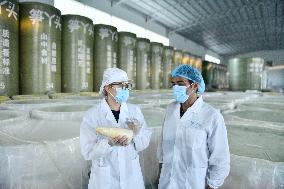
(240725) -- LIUZHOU, July 25, 2024 Photo by Xinhua/ABACAPRESS.COM) -- Yan Qianqian (L) and her father Yan Jiantiao (C) inspect the ferment situation of pickled bamboo shoots with Dr. Yu Wanguo from College of Biological and Chemical Engineering under Guangxi University of Science and Technology, in Liuzhou, south China's Guangxi Zhuang Autonomous Region, July 24, 2024. After working at an airport for 5 years, Yan Qianqian decided to quit the job and start her own business in her hometown in 2021. Yan Qianqian, now 29, and her father Yan Jiantiao founded an agriculture company focusing on producing pickled bamboo shoots, which is an important ingredient for the popular Luosifen rice noodles. For years, she has been working with experts from local universities to improve the traditional making methods of the pickled bamboo shoots with modern technologies, trying to gain more favor from the young generation. Photo by Xinhua/ABACAPRESS.COM/Huang Xiaobang)

  •  
CHINA-GUANGXI-LIUZHOU-PICKLED BAMBOO SHOOTS-YOUNG ENTREPRENEUR (CN)

CHINA-GUANGXI-LIUZHOU-PICKLED BAMBOO SHOOTS-YOUNG ENTREPRENEUR (CN)

(240725) -- LIUZHOU, July 25, 2024 Photo by Xinhua/ABACAPRESS.COM) -- Yan Qianqian (L) and her father Yan Jiantiao visit a restaurant for survey of pickled bamboo shoots in Liuzhou, south China's Guangxi Zhuang Autonomous Region, July 23, 2024. After working at an airport for 5 years, Yan Qianqian decided to quit the job and start her own business in her hometown in 2021. Yan Qianqian, now 29, and her father Yan Jiantiao founded an agriculture company focusing on producing pickled bamboo shoots, which is an important ingredient for the popular Luosifen rice noodles. For years, she has been working with experts from local universities to improve the traditional making methods of the pickled bamboo shoots with modern technologies, trying to gain more favor from the young generation. Photo by Xinhua/ABACAPRESS.COM/Huang Xiaobang)

  •  
CHINA-GUANGXI-LIUZHOU-PICKLED BAMBOO SHOOTS-YOUNG ENTREPRENEUR (CN)

CHINA-GUANGXI-LIUZHOU-PICKLED BAMBOO SHOOTS-YOUNG ENTREPRENEUR (CN)

(240725) -- LIUZHOU, July 25, 2024 Photo by Xinhua/ABACAPRESS.COM) -- Yan Qianqian (L) and her father Yan Jiantiao carry bamboo shoots at a planting base in Liuzhou, south China's Guangxi Zhuang Autonomous Region, July 23, 2024. After working at an airport for 5 years, Yan Qianqian decided to quit the job and start her own business in her hometown in 2021. Yan Qianqian, now 29, and her father Yan Jiantiao founded an agriculture company focusing on producing pickled bamboo shoots, which is an important ingredient for the popular Luosifen rice noodles. For years, she has been working with experts from local universities to improve the traditional making methods of the pickled bamboo shoots with modern technologies, trying to gain more favor from the young generation. Photo by Xinhua/ABACAPRESS.COM/Huang Xiaobang)

  •  
CHINA-GUANGXI-LIUZHOU-PICKLED BAMBOO SHOOTS-YOUNG ENTREPRENEUR (CN)

CHINA-GUANGXI-LIUZHOU-PICKLED BAMBOO SHOOTS-YOUNG ENTREPRENEUR (CN)

(240725) -- LIUZHOU, July 25, 2024 Photo by Xinhua/ABACAPRESS.COM) -- Yan Qianqian (2nd, R) and her father Yan Jiantiao (3rd, R) harvest bamboo shoots at a planting base in Liuzhou, south China's Guangxi Zhuang Autonomous Region, July 23, 2024. After working at an airport for 5 years, Yan Qianqian decided to quit the job and start her own business in her hometown in 2021. Yan Qianqian, now 29, and her father Yan Jiantiao founded an agriculture company focusing on producing pickled bamboo shoots, which is an important ingredient for the popular Luosifen rice noodles. For years, she has been working with experts from local universities to improve the traditional making methods of the pickled bamboo shoots with modern technologies, trying to gain more favor from the young generation. Photo by Xinhua/ABACAPRESS.COM/Huang Xiaobang)

  •  
CHINA-GUANGXI-LIUZHOU-PICKLED BAMBOO SHOOTS-YOUNG ENTREPRENEUR (CN)

CHINA-GUANGXI-LIUZHOU-PICKLED BAMBOO SHOOTS-YOUNG ENTREPRENEUR (CN)

(240725) -- LIUZHOU, July 25, 2024 Photo by Xinhua/ABACAPRESS.COM) -- Yan Qianqian (C) and her father Yan Jiantiao (L) observe the ferment situation of pickled bamboo shoots with Dr. Yu Wanguo from College of Biological and Chemical Engineering under Guangxi University of Science and Technology, in Liuzhou, south China's Guangxi Zhuang Autonomous Region, July 24, 2024. After working at an airport for 5 years, Yan Qianqian decided to quit the job and start her own business in her hometown in 2021. Yan Qianqian, now 29, and her father Yan Jiantiao founded an agriculture company focusing on producing pickled bamboo shoots, which is an important ingredient for the popular Luosifen rice noodles. For years, she has been working with experts from local universities to improve the traditional making methods of the pickled bamboo shoots with modern technologies, trying to gain more favor from the young generation. Photo by Xinhua/ABACAPRESS.COM/Huang Xiaobang)

  •  
CHINA-GUANGXI-LIUZHOU-PICKLED BAMBOO SHOOTS-YOUNG ENTREPRENEUR (CN)

CHINA-GUANGXI-LIUZHOU-PICKLED BAMBOO SHOOTS-YOUNG ENTREPRENEUR (CN)

(240725) -- LIUZHOU, July 25, 2024 Photo by Xinhua/ABACAPRESS.COM) -- Yan Qianqian takes a rest in her office in Liuzhou, south China's Guangxi Zhuang Autonomous Region, July 24, 2024. After working at an airport for 5 years, Yan Qianqian decided to quit the job and start her own business in her hometown in 2021. Yan Qianqian, now 29, and her father Yan Jiantiao founded an agriculture company focusing on producing pickled bamboo shoots, which is an important ingredient for the popular Luosifen rice noodles. For years, she has been working with experts from local universities to improve the traditional making methods of the pickled bamboo shoots with modern technologies, trying to gain more favor from the young generation. Photo by Xinhua/ABACAPRESS.COM/Huang Xiaobang)

  • Main
  • Top
  • Editorial
  • Creative
  • About Us
  • About ILG
  • Terms of use
  • Company
  • BEHIND
  • Price List
  • Single Plan
  • Monthly Plan
  • Services
  • Shooting
  • Rights Clearance
  • Support
  • FAQ
  • How To Buy
  • Contact Us
  • Become a Partner

© KYODO NEWS IMAGES INC

All Rights Reserved.

  • Editorial
  • Olympics
  • News
  • Sports
  • Japan
  • Tech
  • Royal
  • Disaster
  • NorthKorea
  • Old Japan
  • SNS

  • Creative
  • Food
  • Japan
  • Landscape
  • Animal
  • Popular
  • #Ukraine
  • #Thailand
  • #coronavirus
  • #N. Korea
  • #China
  • #Russia
  • #Ukraine
  • #Thailand
  • #coronavirus
  • #N. Korea
  • #China
  • #Russia
  • Food
  • Japan
  • Landscape
  • Animal
  • Olympics
  • News
  • Sports
  • Japan
  • Tech
  • Royal
  • Disaster
  • NorthKorea
  • Old Japan
  • SNS